
Smith County Warrant Searches
Begin with the court that handled the case. Smith County publishes no official sheriff warrant search. Tennessee has no single statewide warrant portal either. For county criminal or traffic matters, the Circuit Court Clerk routes General Sessions and Circuit Court records, while the sheriff's main number takes service or surrender questions. Keep the full legal name, the likely court, an approximate date, and any citation or case number close at hand. Clerks assign those numbers. Local search fields are not published. A missing result is not a clearance. Ask the issuing office to confirm the current docket entry before treating any search as final.
- Call the Circuit Court Clerk at the county clerk's office for a Smith County criminal or traffic case. Give the known citation or case number and ask which court record controls.
- For service or surrender routing, call Sheriff Steve Hopper's office using the official public contact listing. A dedicated warrant line was not located.
- If the matter began as a city ticket or ordinance case, contact that municipal court or city records office. The three city routes are separate.
- For a written request, seek an existing warrant, summons, capias, docket entry, return, or recall order through the county's Open Records Policy and the Tennessee Public Records Act.
- For federal matters, use the Middle District court or PACER case tools, then ask an attorney or the U.S. Marshals for process questions. Neither is a county warrant roster.
No Public Search Form Located
The General Sessions page links to a docket folder. It offers no name-based warrant form. There is no status filter. No warrant-number field appears. A docket link can still help with calendar information, but it is not a warrant index. The Smith County sheriff's contact directory lists an office phone with no dedicated warrant extension. Call the main line and ask which office routes a service question before confirming status with the clerk the issuing court names.
What a Warrant Search Asks For
No public search form exists for Smith County. The table here separates details worth gathering from the fields an official warrant portal would actually require. Treat these as preparation points. Use them to get ready for a phone call or a specific records request.
| Field Label | Type | Required | Notes |
|---|---|---|---|
| Full legal name | Clerk inquiry | Ask the clerk | Useful for finding the right file; no online field is published. |
| Date of birth | Identity match | Ask first | May help distinguish names. The county does not state a public-field rule. |
| Case or citation number | Existing record | Helpful | The clerk assigns these numbers; the format is not published. |
| Warrant number | Portal field | Not located | No local public warrant-number format or search field was found. |
| Court and date range | Records request | Specific request | Name the court and date range so staff can identify an existing record. |
Start With the Case Number
Smith County gives its Circuit Court Clerk the job of handling records, court dates, fees and fines, and citation or case numbers. A name match can be uncertain. Give the clerk the court, the approximate filing or appearance date, and any citation number you happen to know. Ask what identity check applies first. The state Comptroller's TPRA guidance says a records request must describe an existing record clearly enough for the office to locate it. A date range helps. So does naming the record type. The county publishes no copy fee schedule, request form fields, or response timeline.
Smith County Warrant Search Results
Smith County posts no public warrant results page or sample warrant record. Treat the listed fields as a checklist. They come from Tennessee process, not from any local screen. If a clerk confirms a match, ask which case, process type, issuing court, and docket entry it refers to.
| Warrant number | Local format not published |
|---|---|
| Process and case | Warrant, capias, or summons type and linked case or citation, if shown. |
| Issuing court | General Sessions, Circuit/Criminal Court, a city court, or a federal court. |
| Bond or release | Terms only if entered and open to public access; no local schedule was found. |
| Status and return | Ask the issuing clerk whether service, recall, or satisfaction has been entered. |
Why a Result Can Be Missing
A blank result can mean the wrong court. It can mean an unindexed filing. It can also be a city matter sitting outside the Smith County case route. Juvenile and sealed records carry separate limits. Federal access may omit sealed or unexecuted process. The Tennessee AOC points warrant questions to the clerk in the county where the case began, and the court's docket, not a sheriff call, is where you confirm the issuing order and any later recall.
Smith County Warrants: Who Holds What
The Circuit Court Clerk keeps Smith County's records. That covers General Sessions and Circuit Court criminal and traffic matters. The sheriff's main office routes service and surrender questions. Carthage, Gordonsville, and South Carthage each keep municipal contacts for their own city ordinance and traffic cases. The AOC courthouse listing maps the Smith County courts.
Use the courthouse listing to find a court office. Then ask that clerk to locate a specific case. Tennessee has no single public statewide warrant search. A Smith County warrant question ends at the clerk who holds the file. The Department of Safety runs its own FTA and license-compliance process. Federal questions go to the Middle District court, PACER, or the U.S. Marshals, depending on the record. Read the AOC's clerk-finder guidance, which sends warrant questions to the clerk in the county where the case began.
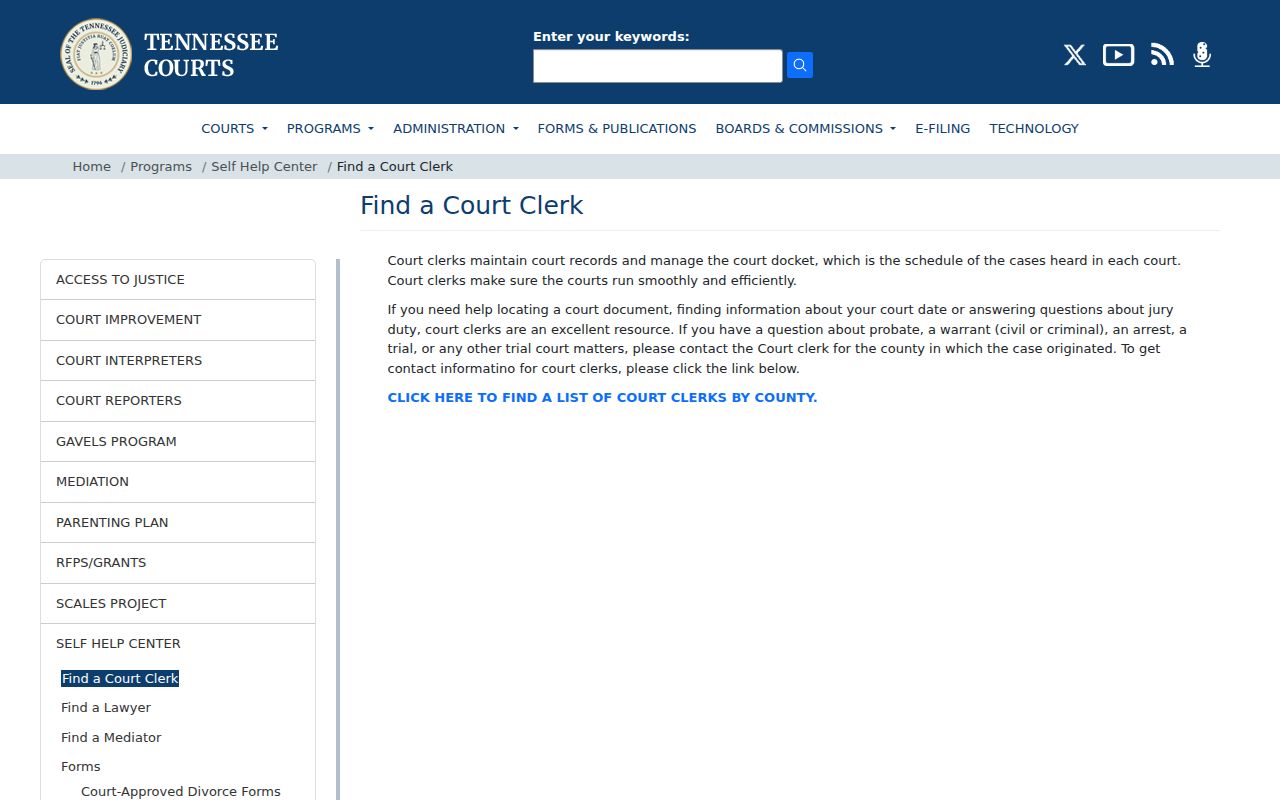
A Smith County clerk can identify the court file, but only the issuing court can confirm its order or any recall.
CourtFeePay Is Not a Warrant Lookup
Smith County links to CourtFeePay for court payments. The clerk's instructions say to pick General Sessions or Circuit Court and have the citation or case number ready. That landing page is a payment route. It is not a name search or a warrant-status screen. A receipt shows a transaction, not a signed recall order or a Safety Department release. After paying, call the issuing clerk. Ask whether the case entry changed and what record confirms the process is resolved.
City Agency Contacts Are Separate
Need the right office in Smith County? The state's TBI SAMSTrack contact directory lists the Smith County Sheriff along with Carthage, Gordonsville, and South Carthage police. Treat it as a phone book. It routes calls; it does not search warrant records or a person's case. For another public-contact reference, open the CTAS Smith County profile and identify the county offices there.
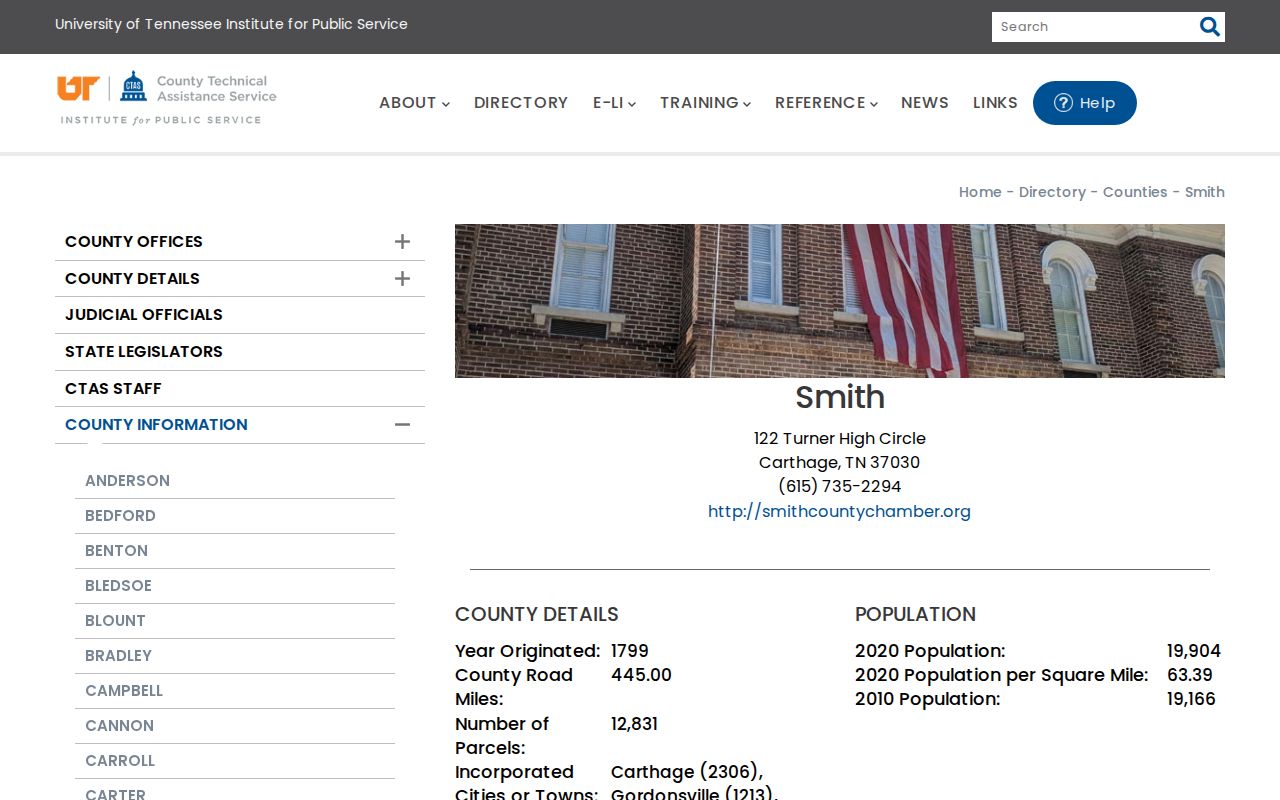
A directory helps you route a call, nothing more. It will not return a warrant status. For an ordinance or traffic file, use the city court clerk; for a county case, use the county Circuit Court Clerk. Only the issuing court can confirm docket status. Open the official agency contact directory when you need those public routes.
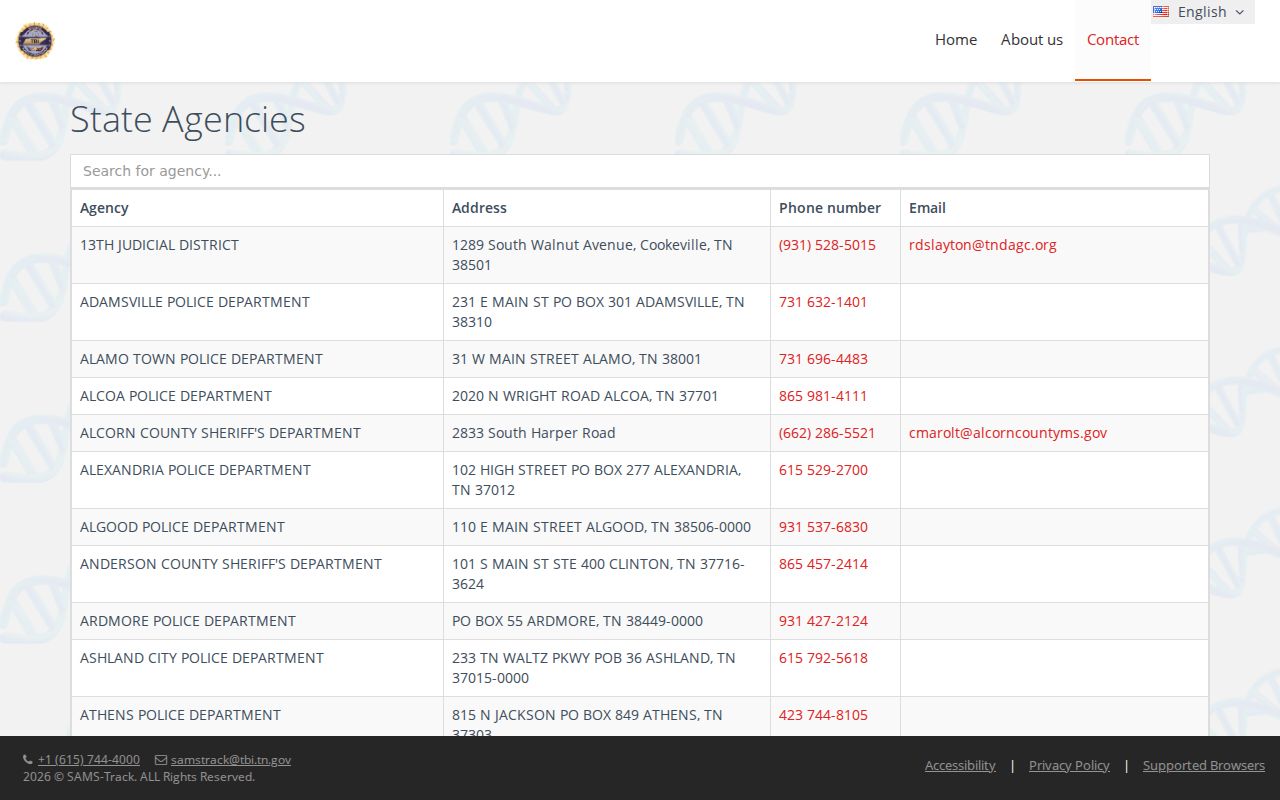
The directory page contains agency contacts, not warrant results.
Which Warrants Stay Restricted
The Tennessee Public Records Act opens most records to inspection, but it does not wipe out privacy rules. Per the Comptroller, Tennessee keeps no central repository, and an office need not build a new list to answer a request. So ask a Smith County office for a specific existing record it already holds.
Key Rules:
Tennessee Public Records Act, send a detailed request to the entity believed to hold the existing file.
Tennessee Code § 37-1-153 sets confidentiality limits for juvenile court records.
A missing result does not prove no warrant exists. Sealed, juvenile, federal, city, or newly entered records may follow a different access route.