
Inside the Smith County Most Wanted Program
Smith County publishes no local most-wanted page, and neither the sheriff nor the municipal sites in the county run a roundup roster of their own. That is worth saying plainly, because it shapes what a search can and cannot do. The absence of a public list proves nothing. An internal law-enforcement roster may still exist, and an outstanding warrant may still be on file even with nothing posted online. What the public actually gets is the statewide Tennessee Bureau of Investigation Top Ten list, a curated program covering all of Tennessee rather than one county. The names, photos, and case details live on TBI's own page, which is the only official source for that program.
No Smith County Roster Was Located
The county's announcements page and the sheriff's public contact information offer no most-wanted list. Smith County posts no roster, no update schedule, and no wanted-person count. There is no public search field, and no Crime Stoppers partnership page connected to a Smith County agency. For a county case, the practical route stays the same: call the clerk of the issuing court about the record, and the sheriff about service. A blank public record is not a status check. The county has not published a roster yet, and until it does, only the court and the sheriff can speak to whether an active warrant exists.
How Smith County Most Wanted Lists Work
The TBI Top Ten program is deliberately narrow. It highlights a small set of cases, focused on violent felonies or major drug trafficking, and a person only qualifies if a warrant is already on file or the individual has escaped custody. The TBI director, or a designee, signs off on each placement. Treat the list as publicity for selected fugitives, not as a full Tennessee active-warrant database. The program's page may mention a reward and how to report a sighting. Smith County itself publishes no companion roster, so there is no local refresh schedule or county lineup to track.
Note: A curated public list is a snapshot of selected cases. It cannot show every open warrant, and a missing name does not establish that no court process exists.
TBI Sets the Public Program Rules
The TBI Criminal Intelligence Unit runs the statewide most-wanted program alongside partner agencies. Its official page lays out who qualifies, how director approval works, possible rewards, and how the public can submit a tip. Smith County gets no named unit there. Nor does the program claim to weigh every local warrant. For current selections or reward terms, use the TBI's own page. Keep profiles, photos, and person-specific allegations off any county page.
Sending a Most Wanted Tip Safely
TBI's tips page gives an online form, and the agency says anonymous tips may earn a reward if they lead to an apprehension. The phone line is 1-800-TBI-FIND, and email tips go to TipsToTBI@tbi.tn.gov. That channel is for reporting a wanted person, not for asking about your own Smith County court status.
- Use the official TBI tips page or its published agency contact.
- Share observations with law enforcement through that channel, not on social media or a private message to a listed person.
- Do not approach, follow, or try to detain anyone. Let officers assess the information.
- Ask TBI how any tip number or reward follow-up works; the program page sets the current terms.
Read TBI's official tip instructions before sending information.
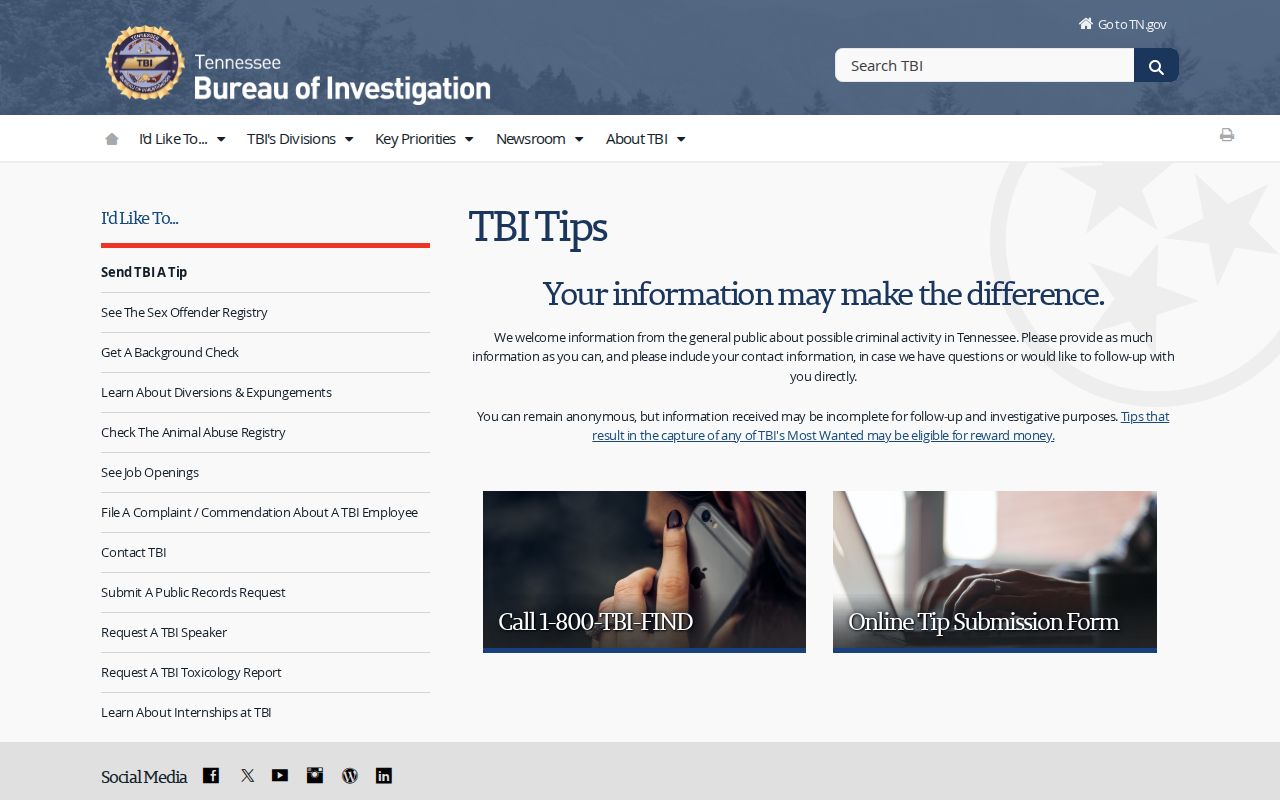
The image is a reporting page, not a roster of people.
Key Point: A tip channel is not a warrant-status tool. Report information to the official agency and step away from the situation.
No County Roundup or Amnesty Notice
Smith County's announcements and the three municipal sites carry no notice of a warrant roundup, amnesty week, fee waiver, or special surrender program. No such event exists here on paper. Tennessee SB2099, often mentioned alongside these questions, was only a proposed court-appearance reminder bill, not a live Smith County amnesty offer or any local court notice. If you missed a court date, ask the issuing clerk, the municipal court, the sheriff, or an attorney what happens next. Never count on a rumored grace period unless the court responsible publishes it itself. The Tennessee bill page tracks that proposal's history, but a bill about court appearances is not a county warrant event.
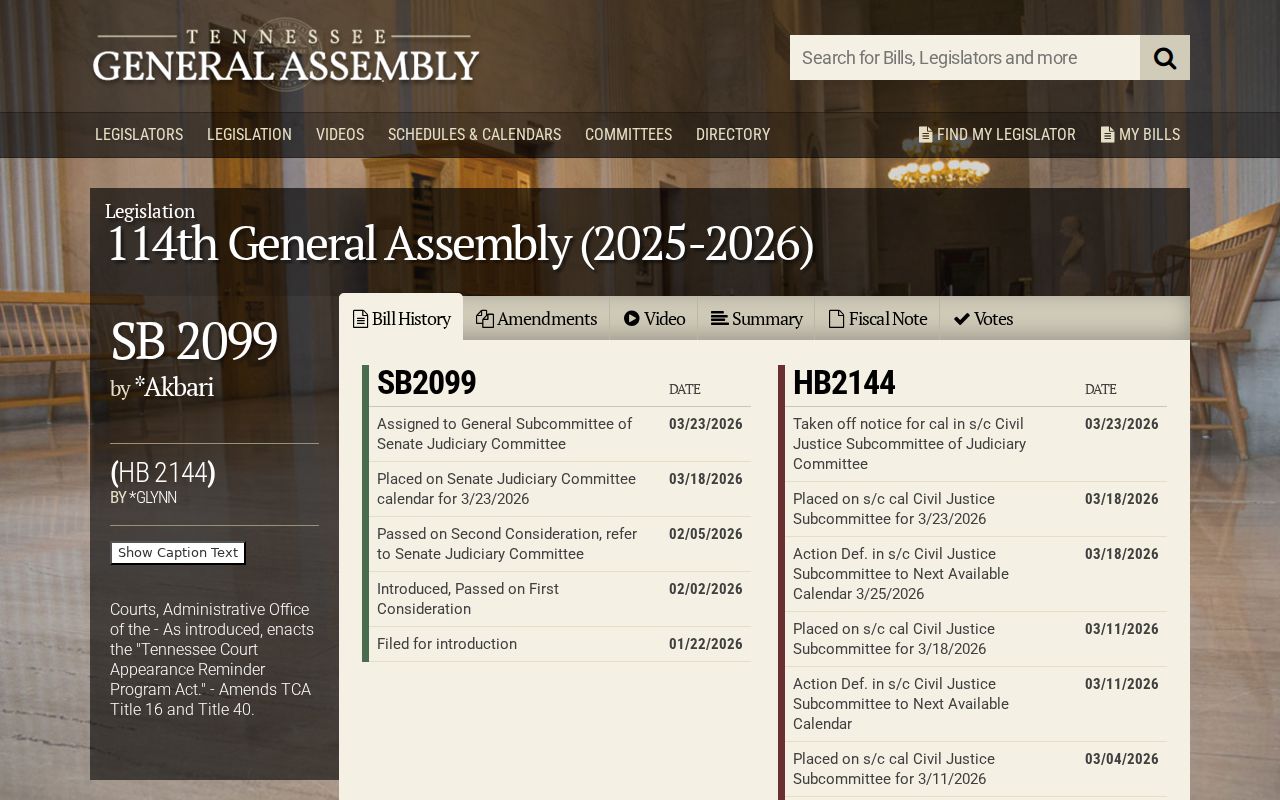
A bill in the legislature and a Smith County court notice are two different records. Confirm any program with the court that would run it.
How Most Wanted Differs From an Active Warrant
A most-wanted list is built for public attention. An active warrant is a court process that stays open until a judge acts. Smith County publishes no official public active-warrant list, so there is no local roster to compare against the TBI Top Ten.
| Feature | Most Wanted List | Active Warrant |
|---|---|---|
| Scope | Selected statewide cases | Process a court treats as open |
| Publisher | TBI program page | Issuing clerk or authorized agency |
| Purpose | Public tips under agency rules | Case status and court action |
| Confirmation | Read current agency instructions | Ask the issuing court or counsel |
Federal Tips Follow a Different Route
Federal fugitive questions sit outside a Smith County active-warrant check. The U.S. Marshals Middle District profile describes a joint task force and its own tip route, separate from the TBI Top Ten program and from any county court docket. PACER's official site covers federal court records, including account fees, but it is a case-document system rather than a warrant roster. Sealed or unexecuted process may never appear there. For a federal question, talk to the federal clerk or an attorney. Never tie a task-force page to a named local person without an official source behind the claim.
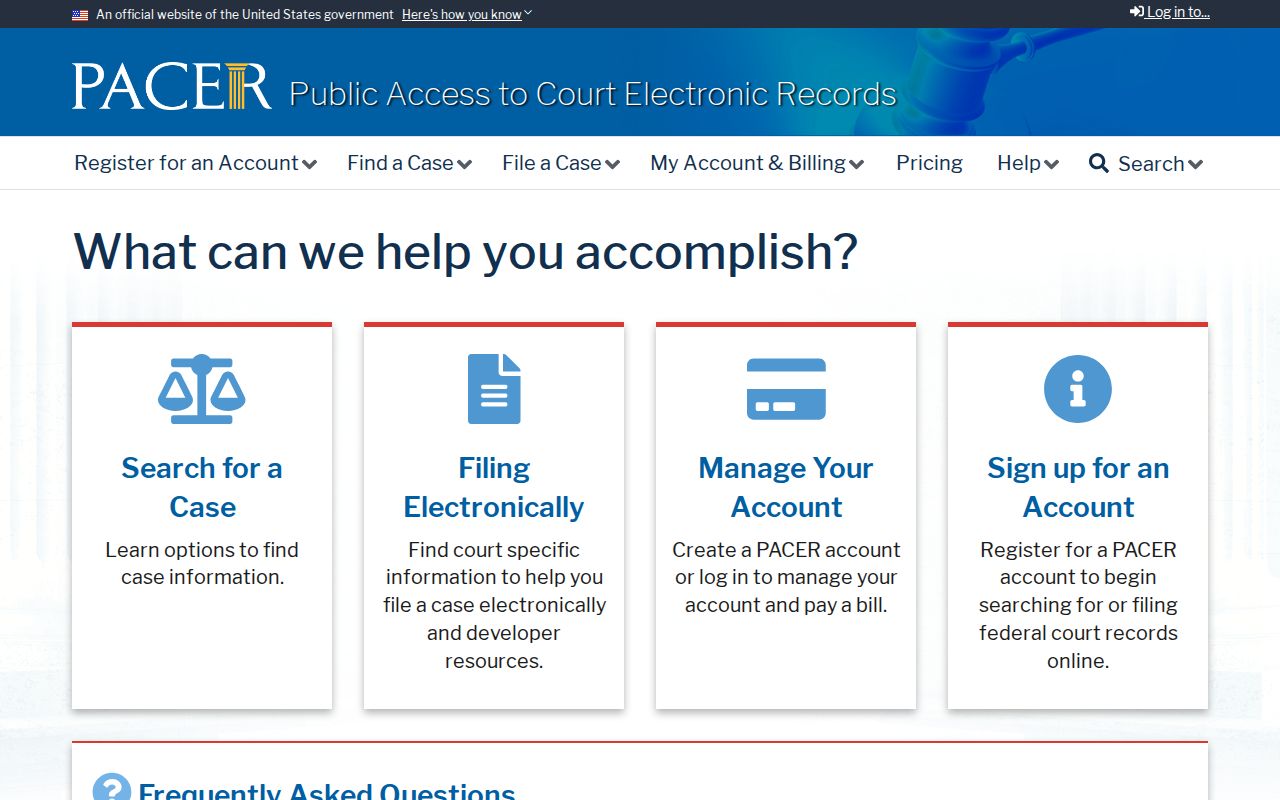
Federal case access remains separate from Tennessee county and city court contacts.
A Tip Does Not Check Court Status
The TBI tips line exists for one job: passing along information about wanted-person cases. It will not tell you whether a warrant is out for you. It cannot confirm a relative's case or check whether a court recalled its process. For anything about your own record, call the clerk of the issuing court or speak with an attorney. Keep the tip channel for what the agency actually asks the public to report. A Smith County status question starts with the Smith County court, not a hotline.
When You Believe You Are Listed
Think a public listing names you? Do not act on a name match alone. Get a lawyer, then contact the agency that owns the listing. For a Smith County matter, confirm the issuing court first, and ask the clerk what the record shows as the current status.
Important: Use counsel and the issuing agency to confirm the case and discuss surrender, bond, or recall. Do not approach anyone shown on a list.