
Smith County Warrant Checks
Begin with the court that handled the case. The Circuit Court Clerk routes Smith County General Sessions, Circuit, and Criminal Court records. Sheriff's staff at the main office field service questions. A city court handles its own ordinance and traffic cases. Keep the full legal name, a rough date, the court, and the citation or case number close at hand. The sheriff posts no public Smith County warrant search, and Tennessee runs no statewide warrant portal either. A docket folder or a payment screen is not a warrant index. Ask the issuing clerk to confirm a match and its current status before you rely on anything.
- For county criminal or traffic matters, contact the Circuit Court Clerk and name the known case or citation number.
- For service or surrender routing, call the sheriff's main office at the contact listed by UT CTAS. A dedicated warrant line was not located.
- For an ordinance or city ticket, contact Carthage, South Carthage, or Gordonsville municipal court or city records staff.
- For a written request, ask the office that likely holds the file for an existing warrant, capias, summons, docket, return, or recall entry.
- For a possible federal case, use the Middle District court or PACER, and ask counsel or the U.S. Marshals about federal process.
The Justice Drive Offices Do Different Jobs
Smith County court and sheriff offices share one address, 322 Justice Drive in Carthage, yet each keeps a different kind of record. The Circuit Court Clerk holds county court files, dates, fees, and citation or case numbers. Sheriff Steve Hopper's office handles service and routing. The county's General Sessions page lays out local jurisdiction and the calendar, and the AOC courthouse listing names the Smith County Circuit, Criminal, and Chancery complex. Neither one advertises a public warrant counter or walk-in surrender hours. The court page publishes the General Sessions office and schedule, so confirm the right office before you drive over.
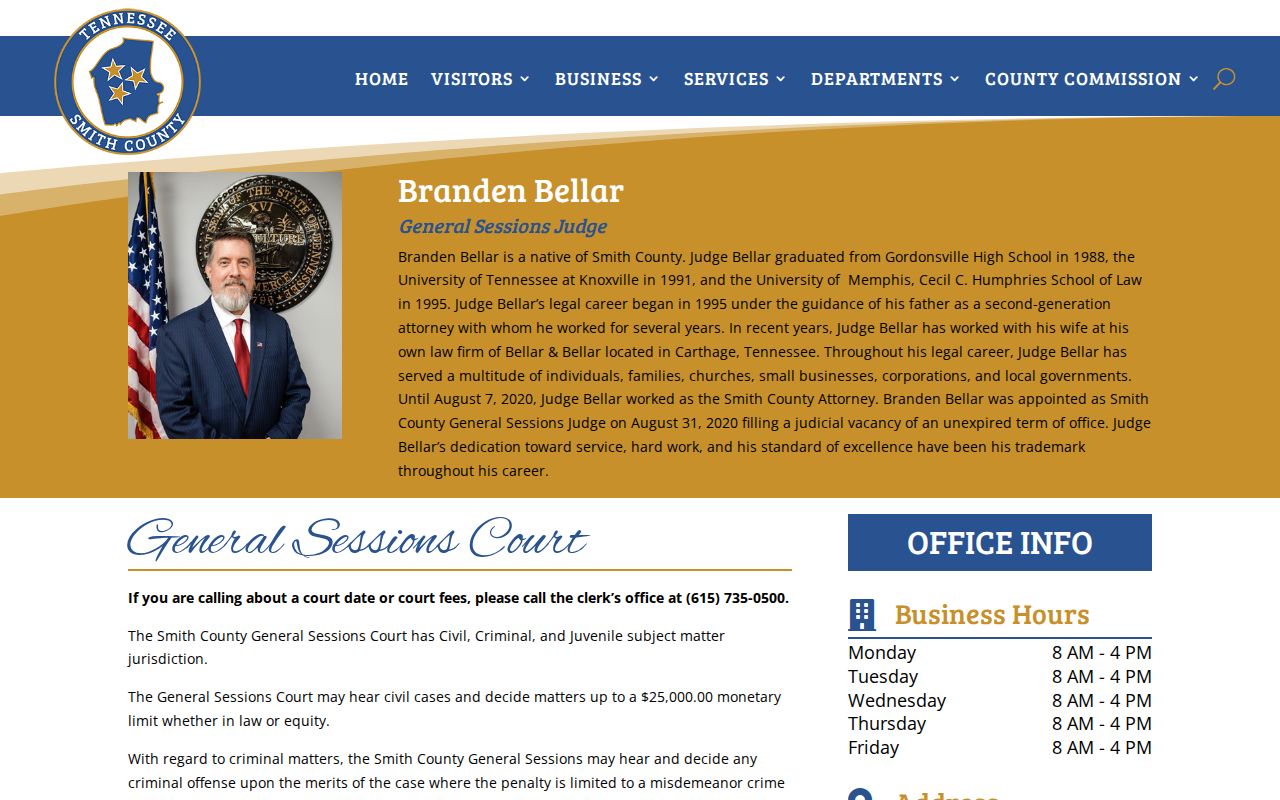
Court listings tell you where a file lives, not whether a warrant exists. For an individual case status, use the clerk. Smith County's Circuit Court Clerk page gives the public office route for county criminal and traffic records. View the Circuit Court Clerk contact page before calling about a citation or docket.
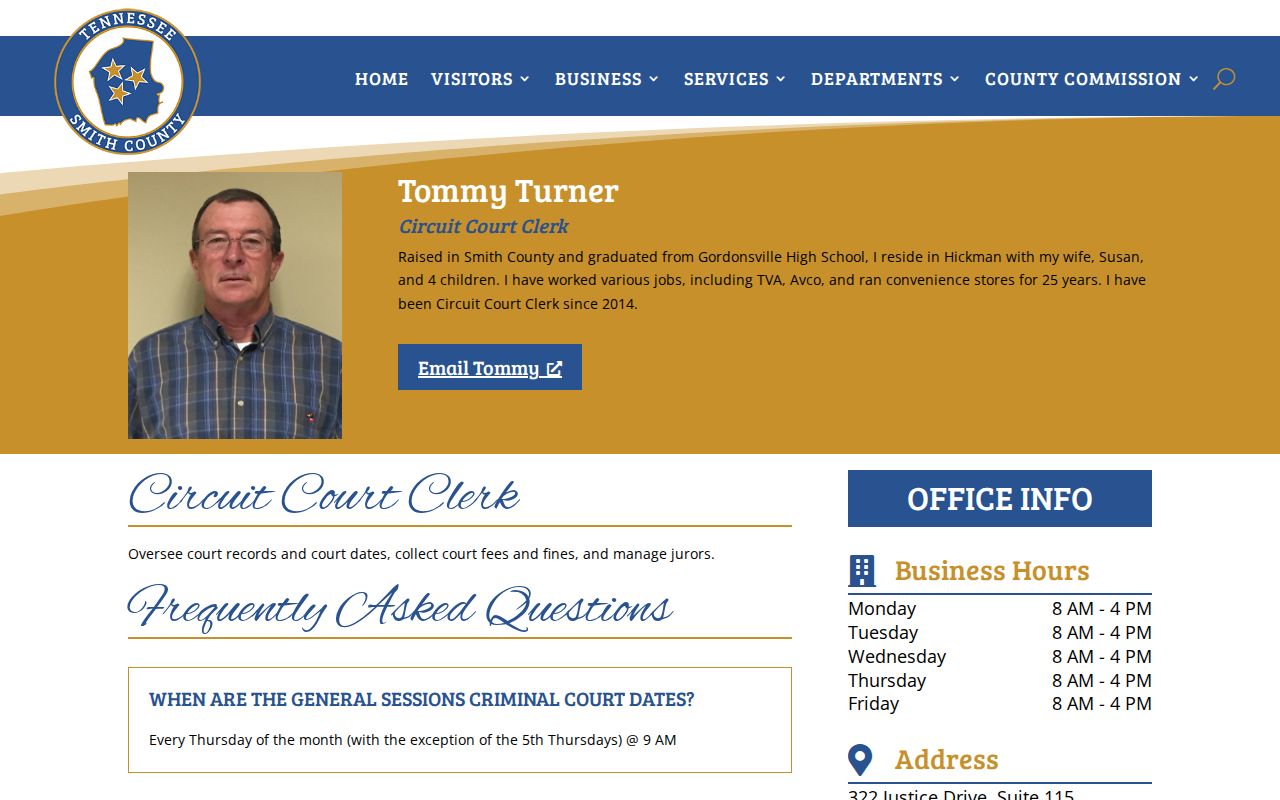
A clerk contact listing is not a live name-based warrant lookup. Smith County's Clerk and Master page describes Chancery and Probate functions, a record path apart from county criminal cases. Review the Clerk and Master office scope when deciding which county office holds your file.
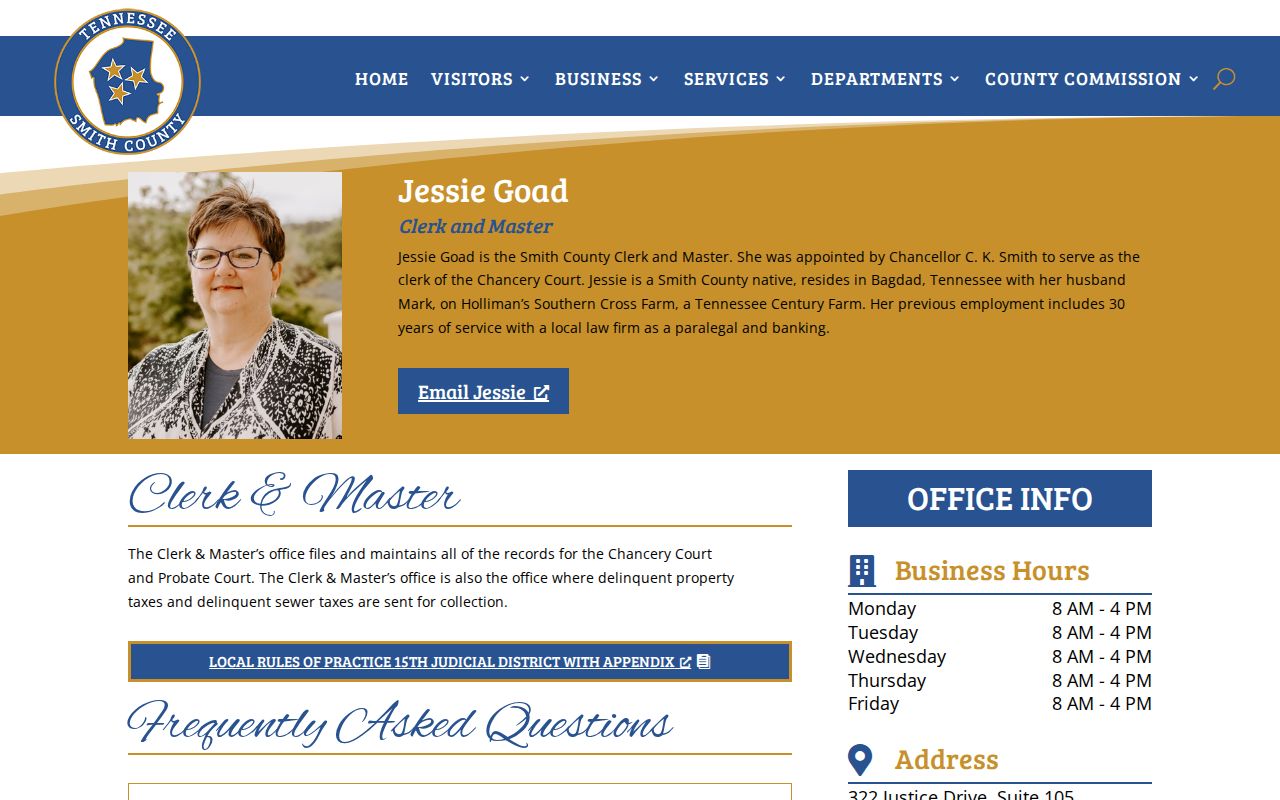
Skip the Clerk and Master for warrant-status questions; county records office or not, that is not its job. Smith County's official home page serves as the county's general government entry point, linking to offices and services.
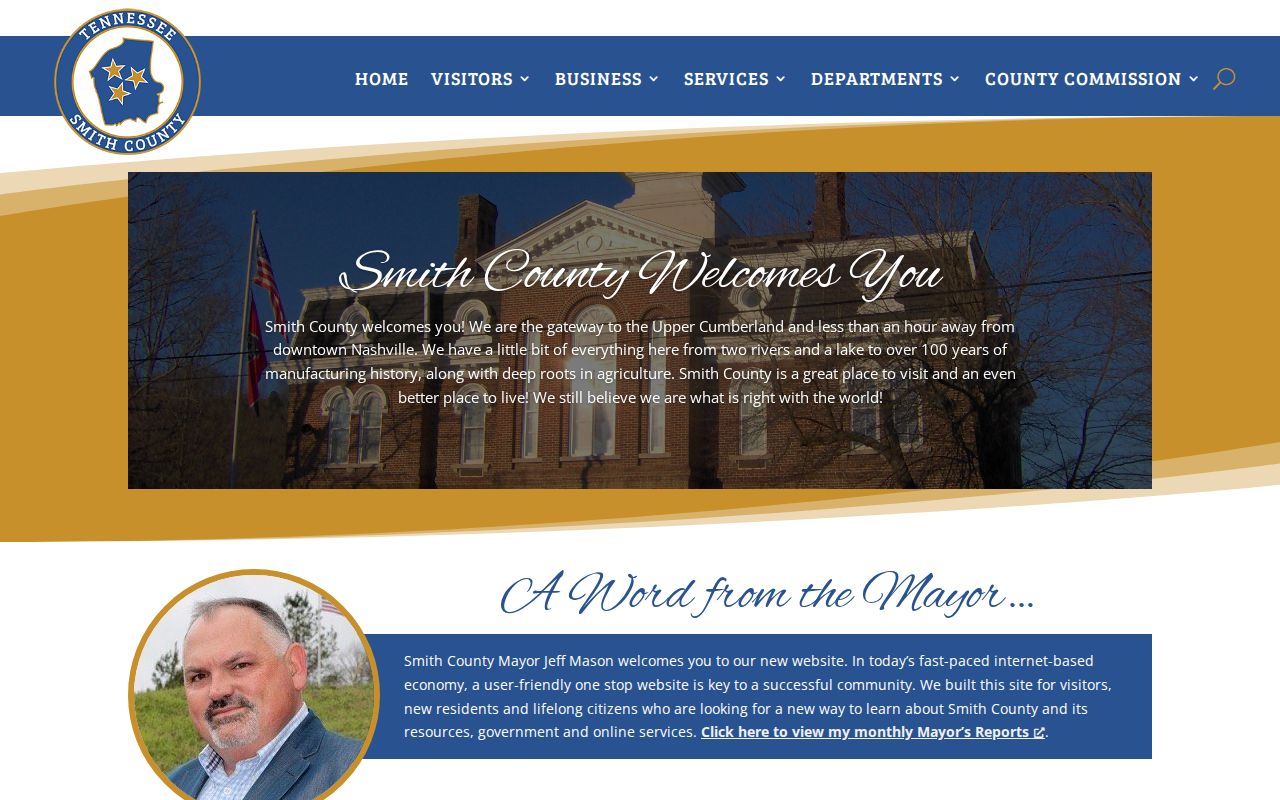
Use its office links to verify contact details, then confirm a Smith County case with the clerk that maintains it.
Warrants in Smith County: The Main Types
Local process can begin in Smith County court, a city court, or a federal court. The name on the document matters. A search warrant authorizes a search. It is not an order to arrest a person.
| Warrant Type | How It Arises | Who Issues It |
|---|---|---|
| Arrest warrant | Complaint or affidavit supports probable cause under Rule 4. | Magistrate, judge, or clerk under the rule. |
| Bench warrant | Missed appearance or court-directed noncompliance. | Judge in the pending case. |
| Search warrant | Judicial authority to search under Rule 41. | Issuing judge or magistrate. |
| Capias | Rule 9 process after indictment or presentment in listed circumstances. | Court handling the criminal matter. |
Tennessee Has No One-State Search Box
Tennessee keeps no central repository for public records, according to the Comptroller, so a warrant question follows whichever court or agency holds the specific case. General Sessions and Circuit Court records, three city courts, sheriff service records, and federal case access never collapse into one public search. The AOC clerk finder tells people with warrant questions to contact the county where the case began. Smith County callers should do exactly that. If a screen or an office returns no result, ask which court to check next rather than assuming nothing is there.
Smith County Warrant Records: What They Show
Smith County publishes no sample warrant entry or local warrant-number format. Tennessee Rule 4 and Rule 9 sketch the legal process. The exact public fields still depend on the record and any access limits.
| Warrant number | Local format not published |
|---|---|
| Case or citation | Identifies a linked court file; the clerk assigns county case and citation numbers. |
| Process type | Arrest warrant, bench warrant, capias, summons, or other process. |
| Issuing court | General Sessions, Circuit/Criminal Court, a municipal court, or a federal court. |
| Bond or release | Only if the record includes it; no countywide bond schedule was found. |
| Return or status | Service, recall, quash, or satisfaction entry if one has been filed. |
CourtFeePay Handles Payments
Smith County links to CourtFeePay for court payments. The county clerk says a user must choose General Sessions or Circuit Court and supply the citation or case number. That screen is not a warrant lookup, a public docket, or a recall certificate. After any payment, contact the issuing clerk and ask whether it posted to the right file and whether the judge entered a separate order. Keep the receipt, and get written confirmation of the current court status.
Smith County Warrants: Who Issues, Who Serves
A judge, magistrate, or other authority issues process under the applicable rule. The clerk keeps the docket. A Smith County sheriff's deputy, a city police officer, or another authorized officer may serve it. Tennessee Safety runs a separate court-reported FTA and license-compliance step, not warrant issuance.
Smith County Sheriff's Office
322 Justice Drive, Suite 200
Carthage, Tennessee 37030
(615) 735-2626
General Sessions Has a Local Calendar
Smith County lists criminal General Sessions on Thursdays except fifth Thursdays, with traffic on first and third Tuesdays at 9:00 a.m. Those schedules help you find the right court office. They do not prove a particular setting or warrant. General Sessions handles local criminal, traffic, juvenile, and civil matters within its stated jurisdiction. For court-date and citation questions, use the Circuit Court Clerk contact rather than the Clerk & Master, whose listed work is Chancery and Probate.
Handling a Smith County Warrant
Start by confirming the issuing court, the case number, and the type of process on the Smith County warrant. Then ask the clerk when the next setting falls and which record will show service, a recall, or compliance. An attorney can walk you through a motion, a planned appearance, a surrender, or bond. No office here publishes one bond amount for every case or a walk-in surrender process.
Important: Ask counsel and the issuing court how to respond before traveling, paying, or arranging a surrender. A payment alone may not withdraw process.
Three City Courts Need Separate Calls
Carthage, South Carthage, and Gordonsville each have a city court route for ordinance and traffic matters. A municipal warrant may not appear in a county sheriff channel. Carthage lists separate police and records contacts; Gordonsville publishes court and ticket instructions; South Carthage directs the public to a town contact while its site is under construction.
For a city ticket, start with the court named on it. For county criminal or traffic process, use the Circuit Court Clerk/General Sessions channel. Ask the sheriff about service logistics only.
The AOC clerk directory lists the city contacts; the county economic-development page confirms the three-city map.
The county's local economic-development page also shows the relationship among the three municipalities. See the county's three-city reference for geographic context.

A map can tell you which city you are standing in. It cannot tell you which record governs. Only the cited court in Smith County can confirm that. For context, the Census TIGERweb table gives each incorporated place's population; open the 2020 Tennessee place table to see the figures.
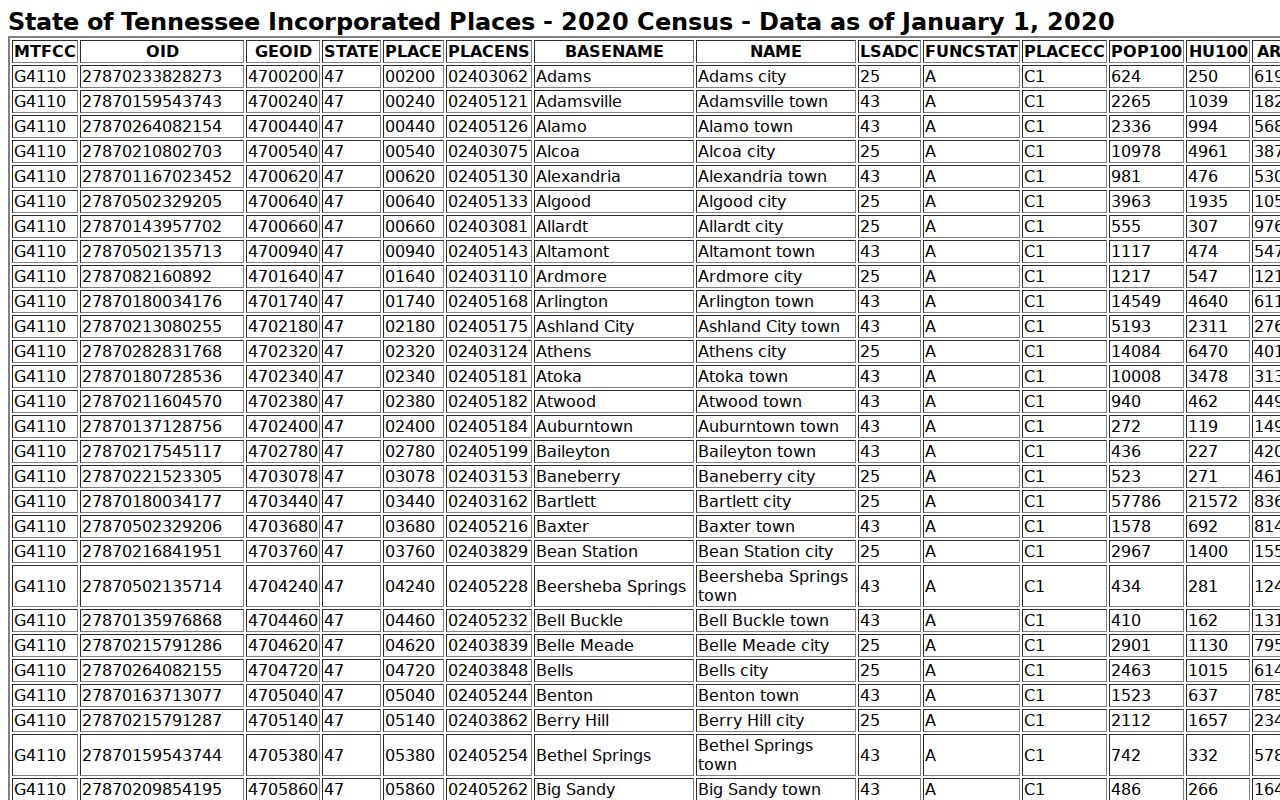
Population is context only; it does not measure warrant volume or court workload.
Warrant Record Access Under Tennessee Law
Tennessee's Public Records Act lets citizens inspect public records unless an exception applies. Requests go to the entity believed to hold an existing record. The Comptroller is clear on one limit: an agency does not have to build a new database or compile a name list for you. So ask for something specific. Name a warrant, capias, summons, docket entry, return, or recall order, and give the court, any known case or citation number, and a date range. Smith County publishes an Open Records Policy; the office itself sets the local fees and request fields, so ask the clerk what applies.
Key Rules:
Tennessee Public Records Act, T.C.A. § 10-7-503: request existing public records from the entity likely to hold them.
Tennessee Code § 37-1-153: juvenile court files have special confidentiality limits.
Sealed, juvenile, investigative, and other protected records may not be open to a general requester. A records law does not override a specific restriction.
How to Ask for an Existing Record
Under the Public Records Act, send a written request to the Smith County office most likely to hold the file. Be specific. Identify the court or agency, the record type, a known citation or case number, and an approximate date range. An existing warrant, docket entry, return, summons, or recall order is a fair ask. The Comptroller's guidance says an office need not create a new record or compile a fresh list, so frame your request around papers that already exist. Smith County links an Open Records Policy for the official route; its request fields, local fees, and response timing come from that office. Open the Smith County policy before you send anything in.
Tennessee Safety Handles a Separate FTA Step
A failure to appear reported by a court can reach your driving privileges through the Tennessee Department of Safety. That administrative status is not a warrant database, and it does not replace the issuing court's docket. Fix the case with the court first. Then ask Safety whether it received any required compliance release. On the local side, Smith County posts no warrant count, bond schedule, amnesty day, recall form, or warrant-specific fee schedule. Budget figures, city population totals, and court dates are not warrant statistics either.
City Warrant Records in Smith County
By 2020 Census count, the Smith County city order runs Carthage (2,291), South Carthage (1,490), and Gordonsville (1,363). Each city keeps its own police, municipal court, or recorder route for local matters. None of the three posts a public warrant-name search.
Carthage Warrants
2,291 in the 2020 Census · Police, court, and city records routes.
South Carthage Warrants
1,490 in the 2020 Census · Town phone and municipal court contact.
Gordonsville Warrants
1,363 in the 2020 Census · Town court and police contacts.